Not all handloading gear is interchangeable, and mixing up rifle reloading equipment in the USA with pistol tools is one of the fastest ways to waste money or ruin a batch of ammunition. Rifle cartridges run higher pressures, longer case lengths, and tighter tolerances than most pistol rounds, which changes the dies, presses, and prep tools you actually need on the bench.
This guide walks through the real differences between rifle and pistol setups, what you can safely save money on, and which kits make sense for a first purchase. Whether you shoot. 223 Remington off a bolt gun or load 9mm for weekend range trips, the goal is the same: buy gear that matches your caliber, not gear that looks impressive on a shelf.
A quick snapshot: rifle setups typically demand more case prep and cost 20 to 40 percent more up front, pistol setups favor speed and volume, and both share a handful of tools that cross over between the two.
Understanding these differences before you buy prevents two common mistakes: overspending on rifle-grade gear for a pistol-only bench, or underbuying tools that a rifle setup genuinely needs to produce safe, consistent ammunition.
Pistol Reloading Equipment in the USA vs Rifle Setups: Key Differences
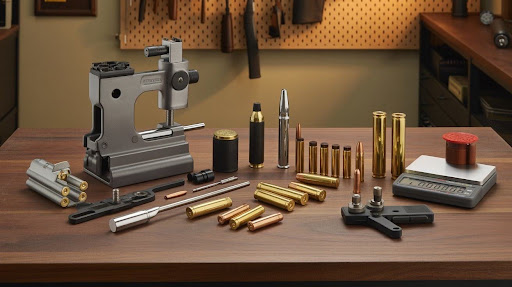
Comparing pistol reloading equipment in the USA against rifle gear starts with pressure and case geometry. Pistol cartridges like 9mm and .45 ACP are straight-walled and run lower pressures, so dies, presses, and case prep tools can be lighter and simpler.
Rifle cartridges, on the other hand, are bottlenecked and run considerably higher chamber pressures, which means the equipment has to handle more force consistently, round after round.
How Pistol Dies and Presses Differ from Rifle Gear
Pistol die sets usually include three dies, sizing, expanding, and seating, and cost $35 to $90 for common calibers. Rifle die sets often add a separate seating die with a micrometer adjustment for more precise bullet placement, pushing typical pricing to $50 to $150.
Presses themselves can overlap; a solid single stage press handles both rifle and pistol work, though rifle sizing requires noticeably more leverage, which is why many rifle-focused reloaders prefer presses with a longer handle and a stronger frame.
Case Length, Trimming, and Why Rifle Brass Needs More Care
Rifle brass stretches with each firing and must be trimmed back to spec, typically every three to five reloading cycles. Pistol brass rarely needs trimming at all, since straight-walled cases see far less stretch under pressure.
Reloading Equipment stocks separate trimming kits for rifle calibres, since this is one step pistol reloaders can usually skip entirely once their brass is sized and cleaned.
Neglecting to trim rifle brass on schedule can lead to excess pressure or a case that will not chamber safely, so most experienced rifle reloaders check case length every time they process a batch rather than trusting memory.
Affordable Reloading Equipment in the USA: Building a Budget Bench
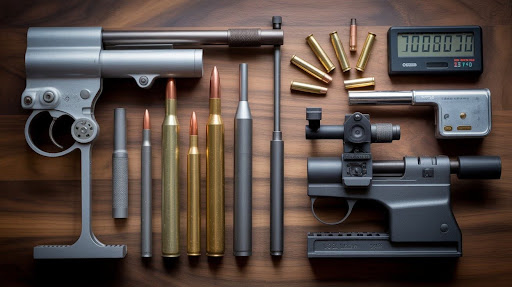
Finding affordable reloading equipment in the USA without sacrificing safety comes down to knowing where corners can be cut and where they cannot. Scales, calipers, and case gauges are not the place to save money, since precision there directly affects safety and accuracy.
Where to Save Without Cutting Corners on Safety
Budget single-stage presses in the $80 to $150 range perform the same core function as premium models costing $300 or more; they just lack extra convenience features. A basic manual case trimmer works fine for occasional rifle reloading, even though a powered trimmer saves time at higher volumes.
Where you should not economize: powder scales, since a scale that drifts even 0.3 grains can push a load out of safe pressure range, and safety glasses, which cost under $15 and protect against a real, if uncommon, primer failure.
Rifle vs Pistol Cost Differences Shooters Should Expect
A complete budget rifle setup, press, dies, trimmer, and scale, typically runs $250 to $450. A comparable pistol setup lands closer to $150 to $300, mainly because rifle reloading needs additional case prep tools that pistol reloading skips.
Per-round savings still favour rifle reloading equipment in the USA purchases over time, since factory rifle ammunition often costs two to three times more per round than factory pistol ammunition, so the higher equipment cost pays for itself faster on the rifle side.
Reloading Equipment Kits for Beginners in the USA: Choosing Your First Kit
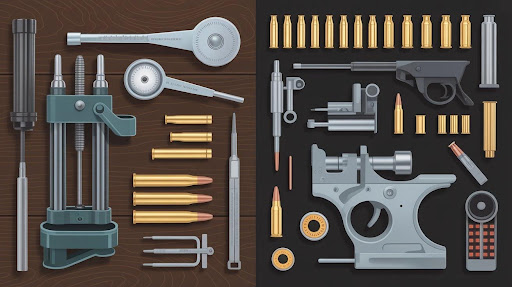
Complete reloading equipment kits for beginners in the USA bundle a press, dies, a scale, and a manual into a single box, which removes much of the guesswork that comes with sourcing every component separately.
What Beginner Rifle Kits Include
A typical beginner rifle kit includes a single-stage press, a full-length die set, a case trimmer, a powder scale, and a reloading manual, usually priced between $350 and $550. Calibers like .223 Remington and .308 Winchester are the most common starting points, since components and load data are widely available.
New rifle reloaders should expect a slower first few sessions, since case prep alone can add 20 to 30 minutes per batch of 50 rounds until the trimming and inspection routine becomes second nature.
What Beginner Pistol Kits Include
Pistol beginner kits skip the trimmer and often add a case gauge instead, priced closer to $250 to $400. 9mm remains the most popular first calibre, thanks to affordable components and consistent brass availability at most ranges.
Retailers such as Reloading Equipment organize both rifle and pistol beginner kits by caliber, which makes it easier to confirm every component matches before checkout instead of discovering a mismatch after the order arrives.
Bullet Reloading Supplies in the USA: Components Every Bench Needs
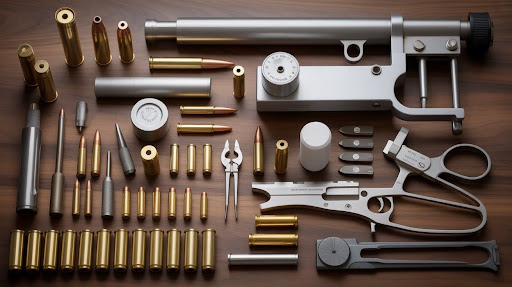
Beyond the press and dies, a steady supply of bullet reloading supplies in the USA keeps a bench running: projectiles, primers, powder, and brass. Each component has to match your specific caliber and load data exactly, since substitutions can change pressure in ways that are not always predictable.
Matching Bullets and Powder to Rifle Calibers
Rifle bullets range from 55 grains for varmint loads in .223 Remington up to 168 grains or more for long-range .308 Winchester loads. Powder selection follows the same logic, with slower-burning powders generally suited to larger case capacities and heavier bullets.
Primer choice matters too: standard rifle primers suit most calibers, while magnum primers are reserved for large case capacities that need a hotter, more consistent ignition source.
Matching Bullets and Powder to Pistol Calibers
Pistol bullets typically run 115 to 147 grains for 9mm and 185 to 230 grains for .45 ACP, paired with faster-burning powders suited to shorter barrels and lower operating pressures. Buying components in bulk, 500 rounds or more at a time, usually cuts per-unit cost by 10 to 20 percent.
Storing powder and primers separately, in cool and dry conditions, keeps both components stable for years, which makes bulk buying a practical way to stock a bench without worrying about spoilage between reloading sessions.
Final Thoughts: Buying the Right Reloading Setup for Your Caliber
The core lesson behind rifle reloading equipment in the USA versus pistol gear is simple: match your purchase to the cartridge you actually load most, not the setup that looks the most impressive. Rifle reloading demands more case prep and a slightly larger budget, while pistol reloading rewards speed and simpler tooling.
Start with an honest look at your primary caliber, then build outward from there. Retailers like Reloading Equipment carry both rifle and pistol presses, dies, and beginner kits, so you can outfit a bench that matches your shooting habits instead of guessing your way through a first purchase.
| Ready to Outfit Your Reloading Bench?
Shop rifle and pistol presses, dies, beginner kits, and bullet supplies, all in one place. |
Frequently Asked Questions
Q1: Can I use the same press for rifle and pistol reloading?
A: Yes, a single stage press handles both, though rifle sizing needs more leverage.
Q2: Is rifle reloading more expensive than pistol reloading?
A: A budget rifle setup runs $250 to $450, compared to $150 to $300 for pistol.
Q3: Do pistol cases need trimming like rifle cases?
A: Rarely, since straight-walled pistol brass stretches far less than rifle brass.
Q4: What caliber is easiest for a first pistol reloading kit?
A: 9mm is the most popular choice thanks to affordable components and brass supply.
Q5: How much can bulk buying save on bullet supplies?
A: Buying 500 rounds of components at a time usually cuts per-unit cost by 10 to 20 percent
Lorem ipsum dolor sit amet, consectetur adipiscing elit. Ut elit tellus, luctus nec ullamcorper mattis, pulvinar dapibus leo.