If you are searching for a top-rated reloading equipment store online in the USA, you have probably noticed just how many types of supplies exist for hand loaders. From presses and dies to primers, powder, and brass, the options can feel endless for someone just starting out. This guide breaks down the main categories of reloading supplies so you know exactly what to look for, whether you shoot pistol, rifle, or both. We will also cover where reloaders typically source bulk components and how to choose equipment that fits your budget and goals.
Bulk Reloading Supplies Arizona in the USA: Sourcing Components at Scale
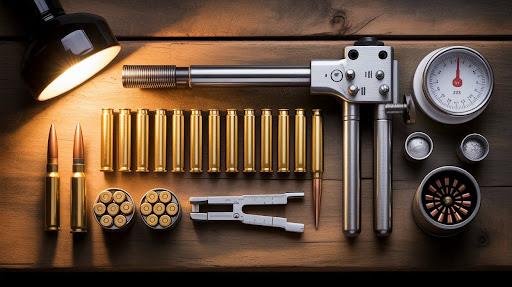
Many serious reloaders eventually look for bulk reloading supplies in Arizona, USA, since the region is home to several major component suppliers and manufacturers. Buying in bulk, often in quantities of 1000 primers or 8 pound kegs of powder, can lower your per round cost significantly over time. At Reloading Equipment, bulk options are available for shooters who load hundreds or thousands of rounds each month and want to avoid running low mid season.
Why Arizona Is a Hub for Bulk Reloading Components
Arizona has become a hub for reloading component distribution partly because of its proximity to major manufacturing and shipping routes, plus a large population of active shooters and hunters. Several powder and primer producers ship directly from warehouses in the state, which can mean faster delivery for buyers across the western United States. This regional advantage often translates into better availability during high demand periods.
During past ammunition shortages, buyers who had already built a small stockpile of primers and powder were able to keep shooting while others waited months for restocks. Planning ahead, even by ordering a modest surplus, can make a real difference during unpredictable market swings.
Buying Powder, Primers, and Bullets in Bulk
Buying powder, primers, and bullets in bulk usually saves 10 to 20 percent compared to purchasing smaller quantities one at a time. A typical bulk order might include an 8 pound jug of powder, 1000 primers, and 500 bullets, which together can supply a moderate shooter for several months. It is worth checking expiration guidance for primers and powder, since proper storage keeps these components stable for years.
Many bulk buyers also split large orders with shooting friends or club members, which lowers the per person cost even further while keeping everyone stocked for the season.
Reloading Equipment Types: A Breakdown for Every Shooter
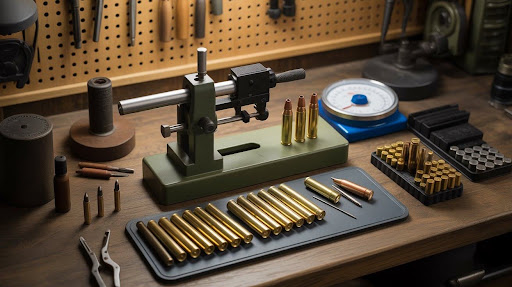
Understanding reloading equipment types in USA is essential before you spend money at any top rated reloading equipment store online in the USA. Broadly speaking, equipment falls into three categories, presses, measuring tools, and case preparation tools, each playing a distinct role in producing safe, accurate ammunition. Knowing which category a tool belongs to makes it much easier to build a complete kit without missing something important.
A simple checklist covering these three categories, before you place an order, can prevent the common beginner mistake of buying a press without the dies or shell holder needed to actually use it.
Single Stage, Turret, and Progressive Presses Explained
Single stage, turret, and progressive presses each suit a different style of reloading. A single stage press handles one operation at a time and is the most common starting point for beginners, typically producing 50 to 100 rounds per hour. Turret presses hold multiple dies at once and speed up the process slightly, while progressive presses can produce 200 or more rounds per hour once you are experienced.
Most hobbyists who load fewer than 200 rounds a month find a single stage or turret press more than sufficient, while high volume shooters and competitive shooters tend to move toward progressive setups within their first year or two.
Dies, Shell Holders, and Case Prep Tools
Dies, shell holders, and case prep tools round out the second category of gear every reloader eventually needs. A full die set typically includes a resizing die, an expander die, and a seating die, each performing a specific job in the reload sequence. Case prep tools like trimmers and chamfer tools keep your brass within safe dimensions for repeated reloading.
A small kit of calipers and a case length gauge rounds out this category, giving you a quick way to confirm every piece of brass meets spec before it goes back into rotation.
Bullet Reloading Supplies in the USA: What Every Kit Should Include
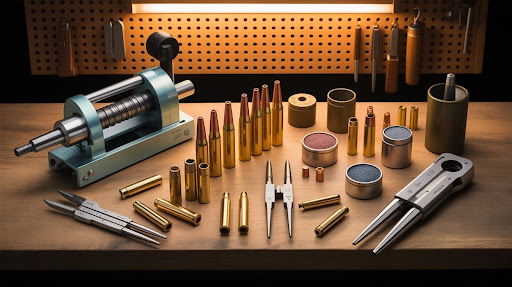
When it comes to bullet reloading supplies in the USA, every complete kit should include bullets, brass, and the tools needed to seat a bullet correctly. Bullet weight and shape affect both accuracy and pressure, so matching your bullet choice to your intended use, target shooting or hunting, matters more than many beginners realize. Reloading equipment carries a wide range of bullet types suited to different calibers and shooting goals.
Bullets, Brass, and Bullet Seating Components
Bullets typically range from 55 grains for small varmint rounds up to 300 grains or more for large hunting calibers, and brass can usually be reloaded 5 to 10 times before it needs replacing. Inspecting brass after each firing extends its usable life and helps you avoid case failures at the range. Keeping brass sorted by headstamp also improves consistency from batch to batch.
Some reloaders keep separate containers for once fired brass versus brass that has been loaded multiple times, which makes it easier to retire cases before they show signs of wear.
Powder Measures and Digital Scales
Powder measures and digital scales are just as important as the bullets themselves when rounding out a complete reloading kit. A digital scale accurate to 0.1 grain ensures your powder charges stay within the safe range published in your load data. A powder measure speeds up the process once you have confirmed your scale settings are correct.
Checking your powder measure against the scale every 10 to 20 throws helps catch drift before it affects an entire batch of ammunition.
Ammo Reloading Supplies in the USA: Primers, Powder, and Safety Gear
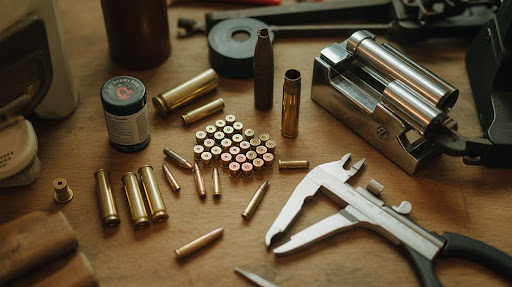
Ammo reloading supplies in the USA also include primers and powder, two components that require careful handling and correct matching to your cartridge and load data. Small pistol, large pistol, small rifle, and large rifle primers are not interchangeable, so double-checking your load manual before ordering is essential. Powder burn rates vary widely, and using the wrong type can create dangerous pressure spikes.
Fast burning powders suit small pistol cases, while slower burning powders are typically reserved for larger rifle cartridges, so cross referencing your cartridge with an approved powder list is a step worth taking seriously.
Choosing the Right Primers and Powder
Choosing the right primers and powder starts with your load manual, since manufacturers publish specific combinations that have been pressure tested for safety. Sticking to published data rather than substituting components on your own keeps your reloads within safe limits. A conservative starting charge, often the lowest listed in the manual, is the safest place to begin.
Working up from a low charge in small increments, often 0.2 to 0.3 grains at a time, lets you watch for pressure signs before settling on a final load.
Storage and Safety Equipment for Reloaders
Storage and safety equipment rounds out any complete reloading setup, including safety glasses, a fireproof storage cabinet, and clearly labeled containers for finished ammunition. Powder should be stored away from primers and heat sources, and most manufacturers recommend keeping quantities under local fire code limits. A small fire extinguisher rated for the materials in your reloading area is a smart addition to any home setup.
A dedicated reloading bench, away from foot traffic and direct sunlight, also reduces the chance of accidental spills or mixed up components during a long loading session.
Final Thoughts
Building a complete reloading setup takes time, and understanding the different categories of supplies available makes the process far less overwhelming. Whether you need bulk components, a full set of dies, or simply want to compare a top-rated reloading equipment store online in the USA before you buy, knowing what each category includes helps you shop with confidence. Reloading Equipment offers a full catalog of presses, dies, bullets, brass, and safety gear for reloaders at every stage of the hobby.
Taking the time to map out your goals, casual plinking, competition, or hunting, before you buy will save you money and help you avoid duplicate purchases down the road.
| Ready to Stock Up on Reloading Supplies?
Shop presses, dies, bullets, brass, and bulk components all in one place. Visit Reloading Equipment today and build your complete reloading kit. |
Frequently Asked Questions
Q1. What is the best way to buy bulk reloading supplies?
Ordering primers, powder, and bullets in bulk quantities from a trusted supplier is the most reliable way to save money and stay stocked.
Q2. What equipment do I need to start reloading?
A press, a die set, a powder scale, and basic safety gear cover the core equipment needed to start reloading.
Q3. How many times can brass be reloaded?
Most brass can be safely reloaded 5 to 10 times before it needs to be inspected closely or retired.
Q4. Are primers and powder interchangeable between calibers?
No, primers and powder are matched to specific cartridges, so substituting components without checking load data is unsafe.
Q5. Where can I buy a full range of reloading supplies online?
Reloading Equipment offers presses, dies, bullets, brass, and safety gear in one online catalog for shooters at every level.