Starting out with ammunition reloading can feel overwhelming, especially with so many components, tools, and safety rules to learn. Whether you shoot pistols, rifles, or handguns, finding the right bullet reloading supplies in the USA is the first step toward building consistent, cost effective ammo at home. This guide breaks down the reloading process into simple, actionable steps so you can get started with confidence, even if you have never touched a press before. From choosing your first set of dies to understanding case prep, we will walk through everything a new reloader needs to know.
Reloading for Beginners in the USA: Where to Start
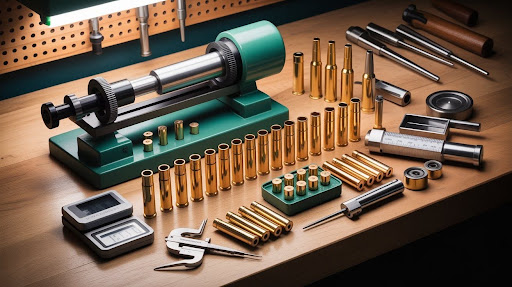
If you are new to the hobby, reloading for beginners in the USA starts with understanding why people reload in the first place. Many shooters save 30 to 50 percent per round compared to buying factory ammo, especially for popular calibers like .223 or 9mm. Beyond cost savings, reloading lets you fine tune loads for accuracy and recoil preference. At Reloading Equipment, beginners can find starter kits that bundle the essential tools in one box, which is often easier than sourcing pieces individually.
Understanding the Basic Reloading Process
Every reload follows the same core sequence, resizing the case, priming, adding powder, seating the bullet, and crimping. Skipping or rushing any step can lead to unsafe ammunition, so patience matters more than speed. A single missed powder charge, for example, can mean the difference between a safe round and a dangerous one. Building a habit of checking each stage twice will save you headaches later.
Common Mistakes New Reloaders Make
New reloaders often mix up powder types or forget to check overall cartridge length. Double charging a case, using the wrong primer, or skipping brass inspection are three mistakes that cause the most safety issues. Keeping a written log of your loads helps you catch errors before they become expensive, or dangerous. Most experienced reloaders will tell you their first year involved at least one avoidable mistake.
A typical starter budget runs anywhere from 300 to 600 dollars once you account for a press, dies, a scale, and basic safety gear. That upfront cost is usually recovered within the first 500 to 1000 rounds loaded, depending on the caliber. Buying a bundled kit instead of separate pieces is often the fastest way to get shooting without overspending on your first setup.
Many beginners start with one caliber, learn the process thoroughly, then expand into others once they feel confident. Trying to learn three calibers at once tends to slow down progress and increases the chance of mixing up components.
Pistol Reloading Equipment in the USA: Essential Tools
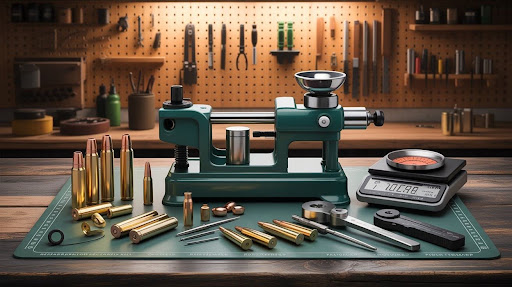
Before loading your first round, you need the right hardware. Pistol reloading equipment in the USA typically includes a press, a set of dies, a powder measure, a scale, and a case trimmer. Single stage presses are ideal for beginners since they load one round at a time and make it easier to learn each step without rushing. Progressive presses come later, once you are comfortable with the fundamentals and want higher output, sometimes producing 200 or more rounds per hour.
Choosing the Right Reloading Press
A single stage press costs less, usually between 100 and 250 dollars, and gives you full control over each stage. It is the most common recommendation for anyone reloading pistol calibers for the first time. Turret presses sit in between, offering a bit more speed without losing too much control.
A few additional accessories make the process smoother, including a priming tool, a case trimmer, and a chamfer and deburr tool for cleaning up case mouths. None of these are strictly required on day one, but most reloaders add them within the first month or two once they see how much time is saved.
Dies, Shell Holders, and Calibration Basics
Each caliber needs its own die set and shell holder, so a 9mm die will not work for a .45 ACP case. Calibrating your dies correctly, using a caliper to check case length after resizing, prevents chambering problems down the road. It only takes a few minutes but saves a lot of frustration at the range.
Many beginners also invest in a small kit of shell holders that cover several common calibers at once, since it is cheaper than buying each one separately later.
How to Reload Ammunition in the USA: Step by Step
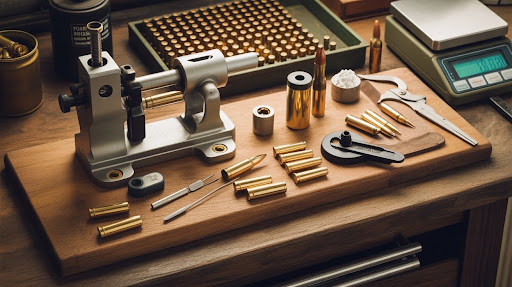
Once your equipment is set up, learning how to reload ammunition in the USA becomes a repeatable routine. Start with clean, inspected brass, then move through resizing, priming, powder charging, bullet seating, and a final crimp. Following a published load manual, rather than guessing at powder charges, keeps every round within safe pressure limits. Bullet reloading supplies in the USA such as verified load data charts make this process far more predictable for first timers.
Case Preparation and Inspection
Inspect every case for cracks, splits, or bulges before it goes near your press. Tumbling brass for 1 to 2 hours removes carbon residue and makes visual inspection easier. Sorting brass by headstamp also helps keep your loads consistent from batch to batch.
Always cross check your load data against at least two published sources, such as a powder manufacturer’s website and a printed reloading manual. Load data can vary slightly between sources, and using the more conservative charge is the safer choice for a first attempt.
It is also worth noting that reloading for personal use is legal across the United States under federal law, though a small number of local rules govern how components are stored. Checking your state and city regulations before you begin is a quick step that avoids problems later.
Priming, Powder Charging, and Bullet Seating
Seat primers by feel, not force, and always weigh your powder charge against your load data rather than trusting a single reading. Bullet seating depth affects both accuracy and pressure, so even a 0.01 inch difference matters. Take your time here, since this is where most quality issues start.
Many new reloaders load 20 to 50 test rounds at a starting charge weight before working up to a final load, checking for pressure signs along the way. This slower approach costs a little extra time but pays off in safer, more accurate ammunition.
Keeping notes on group size, velocity, and any pressure signs for each test batch turns your first few range trips into useful data rather than guesswork.
Handgun Ammunition Reloading Equipment in the USA: What You Need
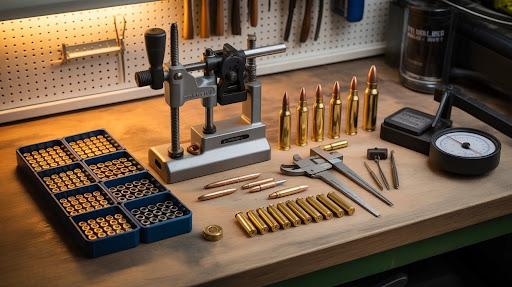
For revolver and semi auto shooters alike, handgun ammunition reloading equipment in the USA should include a reliable digital scale, calipers, and a case gauge to confirm rounds will chamber correctly. Reloading Equipment stocks these items individually or as part of bundled kits, which can save both time and money for someone just getting started. A case gauge alone can catch sizing errors that a visual check would miss.
Powder Scales and Measuring Tools
A digital scale accurate to 0.1 grain is the standard for handgun loads, since even small variances affect pressure and velocity. Beam scales work too, but they take longer to use. Most beginners upgrade to a digital scale within their first few months.
A case gauge, calipers, and a small cleaning kit round out a solid beginner setup. Cleaning your equipment every 500 rounds or so keeps presses and dies working smoothly for years.
Safety Gear and Storage Practices
Store powder and primers separately, away from heat sources, and always wear safety glasses while priming. Following manufacturer storage guidelines reduces fire risk significantly, and most local fire codes have specific rules for how much powder you can keep at home. A cool, dry cabinet away from direct sunlight is usually sufficient for most home setups.
A basic fire extinguisher rated for the materials in your reloading room is a smart addition as well, even though the risk is low when guidelines are followed correctly.
Joining a local reloading or shooting club can also speed up the learning curve, since experienced members are often happy to walk beginners through their first few sessions in person.
Final Thoughts
Reloading your own ammunition takes patience, the right tools, and a commitment to following safe practices every single time. Starting with quality bullet reloading supplies in the USA sets the foundation for consistent, accurate rounds you can trust. If you are ready to build your setup, Reloading Equipment offers a full range of gear designed specifically for beginners moving into this hobby.
Ready to Start Reloading? Shop trusted bullet reloading supplies in the USA and gear up with confidence. Visit Reloading Equipment today and get everything you need to load your first round. |
Frequently Asked Questions
Q1. What is the cheapest way to start reloading ammo?
Starting with a single stage press and a basic die set is the most affordable way to begin reloading.
Q2. Is reloading ammunition legal in the USA?
Yes, reloading ammunition for personal use is legal in the USA as long as you follow federal and local storage regulations.
Q3. How much money can you save by reloading your own ammo?
Reloaders typically save 30 to 50 percent per round compared to buying factory ammunition.
Q4. What safety gear do I need for reloading?
Safety glasses, a well ventilated space, and proper powder and primer storage are essential for safe reloading.
Q5. Can beginners reload handgun ammunition?
Yes, beginners can reload handgun ammunition by starting with a single stage press, quality dies, and a verified load manual.